What the difference really looks like in day-to-day work life
Most people don’t talk about cleaning at work unless there’s a problem.
One mentions the bathrooms are dirty again. Another wipes a meeting table before a client arrives. And someone jokes about the kitchen sponge being older than the company.
That’s usually when the conversation starts. Not because the place is filthy, but because it never quite feels right.
A lot of the time, that comes down to a simple issue. The business is using a general commercial cleaning approach in a space that actually needs corporate cleaning. If that’s what’s hampering your business and your thoughts, you’re at the right place.
Because, in this blog, we are going to talk about what commercial and corporate cleaning is, how they differ in reality and why choosing the right one can make a significant impact on your business than most businesses think.
Commercial Cleaning is About Keeping Things Acceptable
Commercial cleaning is designed to cover a lot of ground. Literally and figuratively.
It’s built for places where many people come and go throughout the day. Retail stores, warehouses, medical centres, schools, shared facilities. These environments need regular cleaning to stay safe, compliant, and usable.
The focus is straightforward:
- Floors are cleaned so they’re safe
- Bathrooms are hygienic
- Rubbish is removed
- Surfaces are wiped down
- The space meets basic standards
Commercial cleaning works to schedules and checklists. It’s about consistency and coverage. It’s not trying to read the room or adapt to how people work. It’s there to make sure nothing obvious is missed.
For many spaces, that’s exactly what’s needed. Without commercial cleaning, those environments fall apart quickly.
But offices are different.
Offices Aren’t Just Spaces, They’re Environments
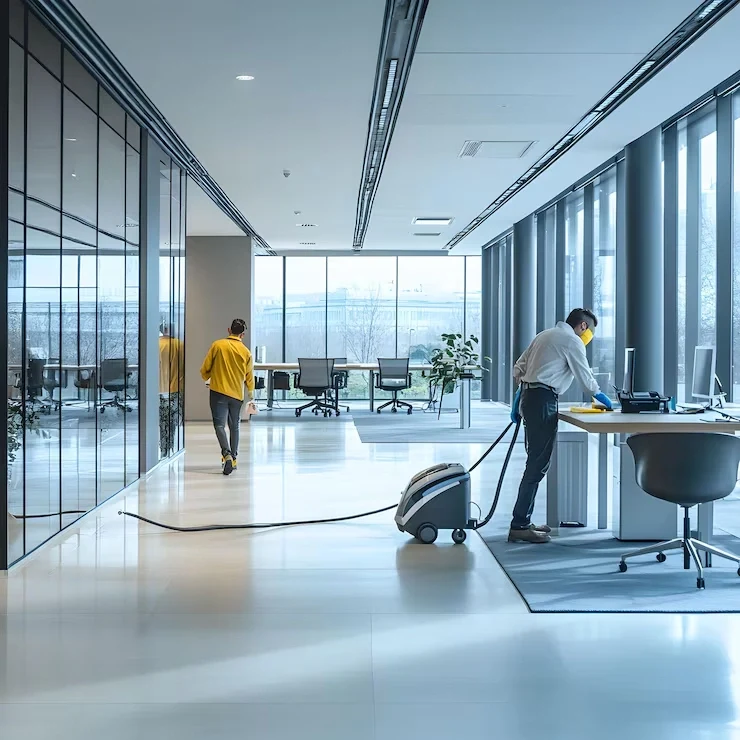
An office isn’t somewhere people pass through. It’s somewhere people sit for eight or more hours a day. They think, talk, argue, concentrate, get distracted, drink coffee, eat lunch, and sometimes stay late when they don’t want to.
That changes what “clean” needs to mean.
In an office, problems don’t show up as hazards. They show up as irritation.
- Desks feel dusty halfway through the week.
- Meeting rooms never feel ready.
- The kitchen looks clean, but doesn’t feel clean.
- Bathrooms are usable, but not pleasant.
None of these things triggers complaints straight away. They just slowly wear people down.
That’s where corporate cleaning comes in.
Corporate Cleaning is About How People Experience the Space
Corporate cleaning starts with a different question. Not “what needs to be cleaned?” but “how is this space actually used?”
It recognises that offices have patterns. Busy mornings. Quiet afternoons. Certain rooms that get used constantly and others that barely get touched. Kitchens that are used heavily at lunch and are ignored the rest of the day.
Corporate cleaning pays attention to those details.
It focuses on areas that affect people directly:
- Workstations that people sit at every day
- Meeting rooms that need to be ready without last-minute tidying
- Kitchens that people feel comfortable using
- Bathrooms that don’t make people hesitate
The aim isn’t to make the office look impressive. It’s to make it easy to work in.
The Real Difference
| Commercial Cleaning | Corporate Cleaning | |
|---|---|---|
| Main goal | Keep the space clean and safe | Make the office comfortable and functional |
| Typical setting | Retail, healthcare, education, industrial | Offices and professional workplaces |
| Cleaning style | Fixed routine | Adjusted to how the office works |
| Result | Meets basic standards | Supports focus and morale |
Commercial cleaning keeps a space acceptable. Corporate cleaning makes it workable long-term.
Why This Matters More Than People Think
People don’t usually complain about cleaning directly. Instead, they change their behaviour.
They clean before meetings. They avoid shared spaces. They stop caring as much about the office.
Over time, that affects how people feel about coming to work. It affects how clients see the business. It affects how seriously the workplace is taken.
When corporate cleaning is done properly, those small frustrations disappear. The office feels looked after. People stop thinking about cleaning altogether, which is exactly the point.
What Corporate Cleaning Actually Involves Day to Day
Corporate cleaning isn’t about doing more work. It’s about doing the right work consistently.
That usually includes:
- Cleaning desks and workstations properly, not just around them
- Vacuuming and floor care that keeps the office feeling fresh through the week
- Meeting rooms cleaned so they’re always usable
- Kitchens cleaned thoroughly, including surfaces people actually touch
- Bathrooms maintained consistently, not just checked
- High-touch areas cleaned without leaving strong smells behind
Timing is important too. Corporate cleaning should fit around the workday, not disrupt it.
So Which One Do You Need?
If your space is public-facing, gets heaps of foot traffic, or is operational, you need commercial cleaning.
If your space is an office where people spend most of their day working, corporate cleaning usually makes more sense.
A lot of businesses need both, especially if they’ve got mixed spaces. The main thing is knowing they’re different and need to be handled differently.
The Bottom Line
Commercial cleaning keeps a business running. Corporate cleaning helps people work better inside it.
If your office never quite feels right despite being cleaned regularly, the issue usually isn’t effort. It’s approach.
Gateway Services provides corporate cleaning services across Sydney with a strong understanding of how offices actually operate day to day. We also handle commercial cleaning for heaps of different industries, so businesses can stick with one reliable provider as things change.
If your workplace feels like it could be running better, have a chat with Gateway Services and we’ll work out a cleaning approach that fits how your people actually work.